Early Childhood Care and Education, or ECCE, has quietly become one of the most talked-about career paths in Indian education. Parents want better-trained preschool teachers. The government’s National Education Policy has pushed early years learning into the spotlight. And thousands of women, graduates, and career-switchers are asking the same question: is the ECCE course actually worth it, and how do you get started?
This guide answers that question completely. You will find the real meaning of ECCE, who can apply, how long it takes, what it costs, what you will study, where you can work, and how much you can realistically earn. No filler, no vague promises — just what you need to make an informed decision.
Key Takeaway: ECCE is a professional qualification that trains you to teach and care for children from birth to around 6 years old. It is one of the fastest entry points into a teaching career in India, especially for women restarting their careers and Class 12 graduates who don’t want to wait four years for a degree.
What Is the ECCE Course? (Meaning and Scope)
ECCE stands for Early Childhood Care and Education. It is both a government policy term and a professional course.
As a policy idea, ECCE refers to India’s approach to nurturing children in their earliest years — a priority the National Education Policy 2020 placed at the centre of school reform by treating the age group of 3 to 8 as a single “Foundational Stage.”
As a course, an ECCE diploma or certificate trains you in the practical skills needed to teach and care for young children: understanding how a 3-year-old’s brain develops, planning play-based activities, managing a classroom of 20 restless toddlers, and communicating with anxious parents.
In simple terms: if NTT (Nursery Teacher Training) prepares you to teach a nursery classroom, and Montessori training teaches you a specific teaching method, ECCE gives you the broader foundation — child psychology, health and nutrition basics, inclusive education, and general early-years pedagogy — that applies across preschools, daycares, and even government childcare programmes like Anganwadis.
Example: A trained ECCE teacher doesn’t just “babysit.” She recognises when a 4-year-old is struggling with fine motor skills, adjusts her lesson to use more hands-on activities, and knows how to explain the issue to a worried parent without alarming them. That is the difference formal training makes.
ECCE Course Eligibility: Who Can Apply?
| Course Level | Minimum Eligibility | Best Suited For |
| Certificate Course | Class 10 pass | Quick entry, working in daycare/assistant roles |
| Diploma (most popular) | 10+2 / Higher Secondary in any stream | Aspiring teachers, mothers restarting careers |
| PG Diploma / Advanced | Graduate in any discipline | Career switchers, those aiming for coordinator/leadership roles |
Checklist — documents you’ll typically need to apply:
- [ ] Filled application form
- [ ] Class 10 and 12 mark sheets (or degree certificate for PG level)
- [ ] Recent passport-size photographs
- [ ] Identity proof (Aadhaar card or equivalent)
- [ ] Registration/course fee payment receipt
There is generally no upper age limit for ECCE courses, which is one reason it attracts so many women returning to the workforce after a career break.
ECCE Course Duration: How Long Does It Actually Take?
| Mode of Study | Typical Duration |
| Regular / full-time diploma | 12–18 months |
| Fast-track / accelerated diploma | 6–9 months |
| Online or distance learning | Up to 24 months (self-paced) |
Duration varies by institute, so always confirm the exact schedule before enrolling anywhere.
Warning: Be cautious of any institute promising a full ECCE diploma in 15–30 days. Understanding child psychology and building real classroom skills cannot be compressed into a few weeks. Such rushed certificates often carry little weight with schools during hiring.
ECCE Course Fees in India: What Should You Budget?
Fees vary widely depending on the institute, course level, and mode of study. Based on current market patterns across private teacher-training institutes in India, here is a realistic range:
| Course Type | Approximate Fee Range (India) |
| Short certificate course (6–12 weeks) | ₹10,000 – ₹18,000 |
| Diploma in ECCE | ₹20,000 – ₹40,000 |
| PG Diploma in ECCE | ₹25,000 – ₹45,000 |
Expert Tip: Don’t choose an institute purely because it’s ₹5,000 cheaper. A price difference that small rarely reflects the actual quality gap. Instead, compare accreditation, syllabus depth, practical/internship components, and whether personal tutor support is included. A slightly higher fee that comes with genuine mentorship is usually worth more than a “budget” course with no support.
Institutes like GMTTI structure their ECCE Diploma with an affordable fee model that includes personal tutor support throughout the course — but fee structures do change with batches and offers, so it’s always worth requesting the current fee sheet directly from the institute’s admissions team rather than relying on numbers you find online.
What You’ll Study: ECCE Syllabus Overview
A well-designed ECCE syllabus typically covers:
- Child Psychology and Development — how children grow physically, emotionally, and cognitively from birth to age 6
- Play-Based Learning Methodologies — using activities, stories, and games as teaching tools rather than rote instruction
- Classroom Management — handling group behaviour, routines, and transitions with 15–25 young children
- Health, Nutrition and Safety Basics — recognising developmental delays, basic hygiene practices, and safe classroom environments
- Curriculum and Lesson Planning — designing age-appropriate weekly and monthly teaching plans
- Inclusive Education — supporting children with different learning needs within a mainstream classroom
- Communication Skills — working effectively with parents, co-teachers, and school administration
- Practical Teaching / Internship — supervised classroom demonstrations, often the most valuable part of the course
Example lesson plan snippet: A trainee might be asked to design a 30-minute activity teaching colours to 4-year-olds using only classroom objects — no printed worksheets. This kind of practical assignment is far more useful than theory alone, because it’s exactly what a real classroom day demands.
Online vs Distance vs Regular ECCE Classes: Which Should You Choose?
| Mode | Best For | Pros | Watch-outs |
| Regular/in-class | Students near a physical centre, prefer hands-on guidance | Direct mentor access, peer learning, live demonstrations | Fixed schedule, travel required |
| Online (live/recorded) | Working professionals, mothers managing home responsibilities | Full flexibility, learn from any city | Requires self-discipline |
| Distance learning | Those wanting a recognised diploma without daily classes | Study at your own pace, lower ongoing time commitment | Practical/internship component still essential — verify it’s included |
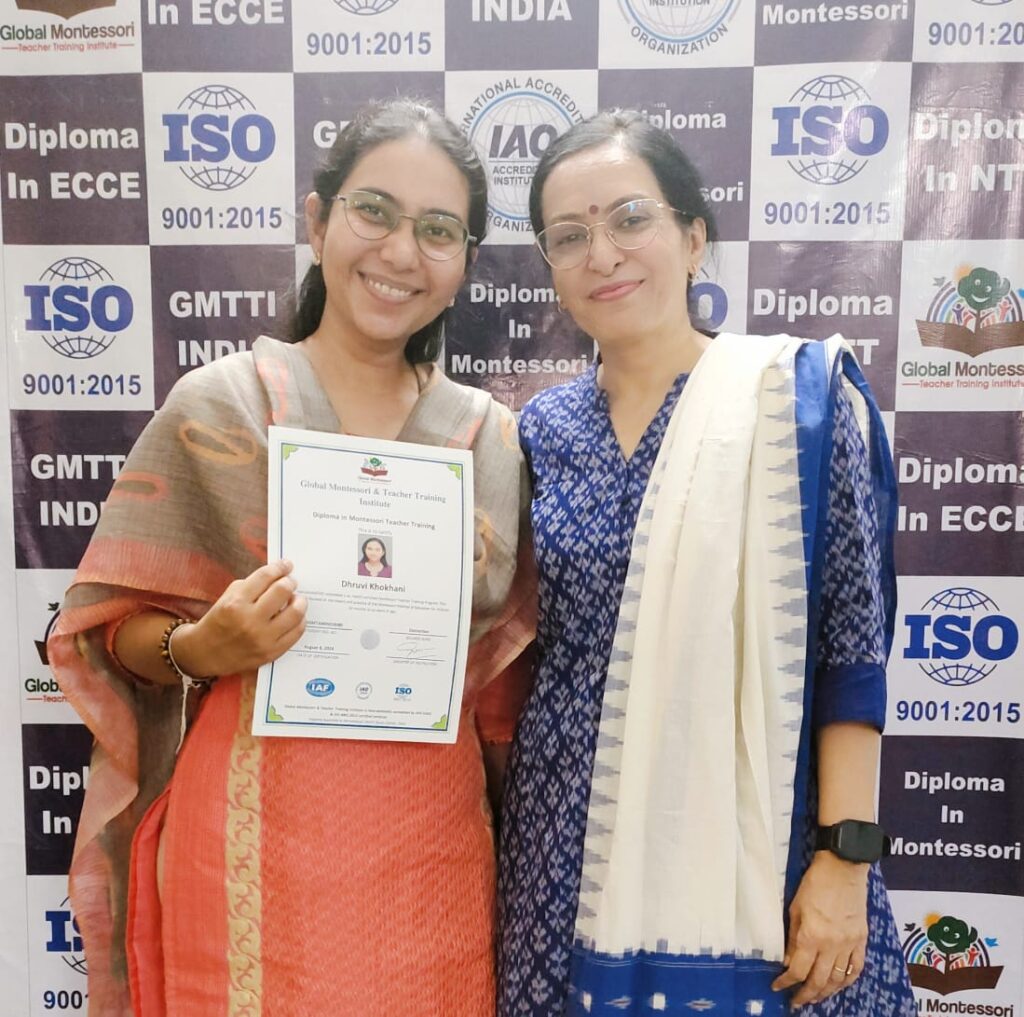
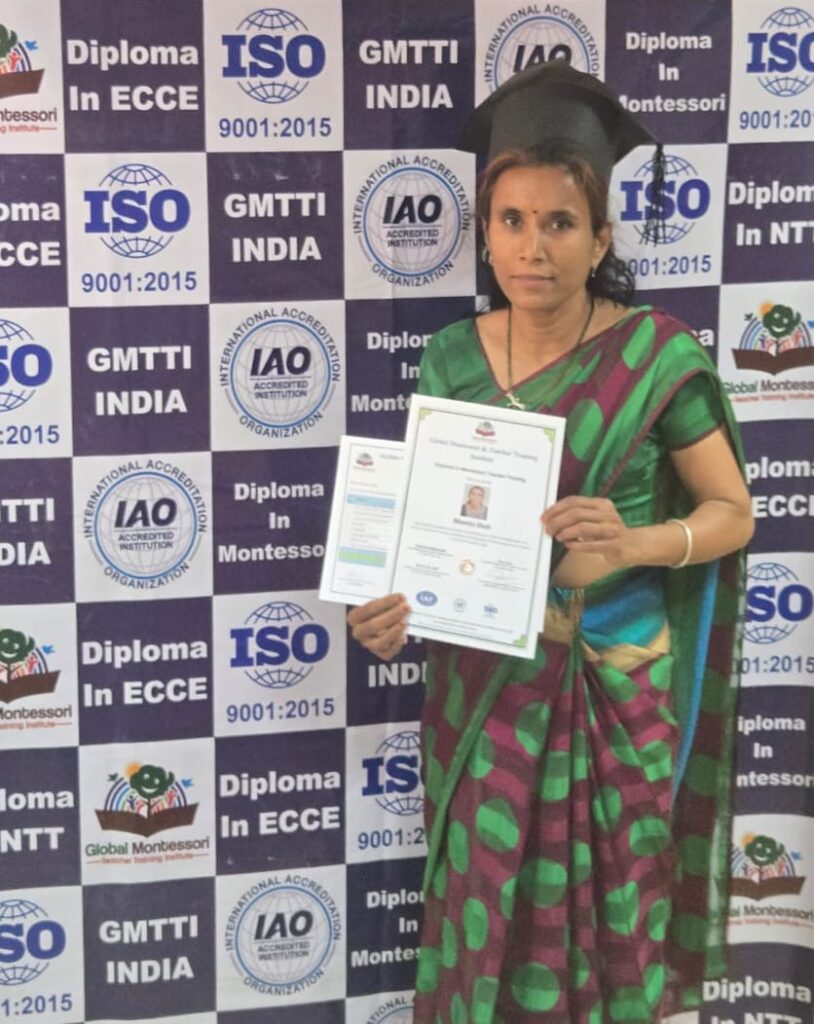
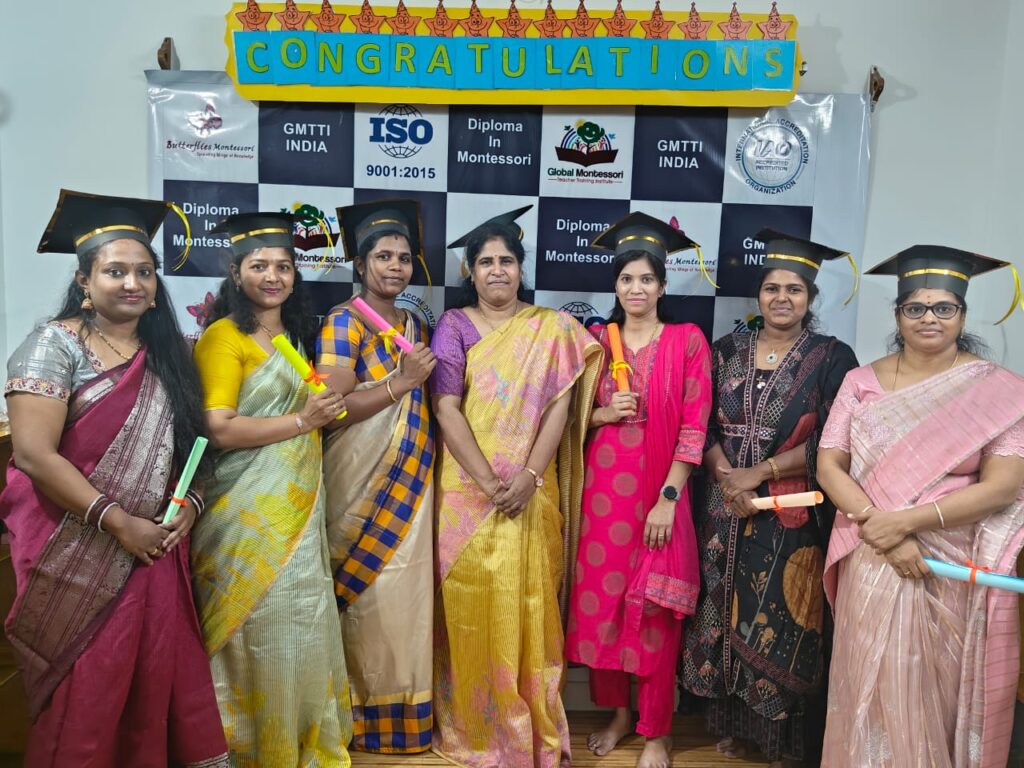
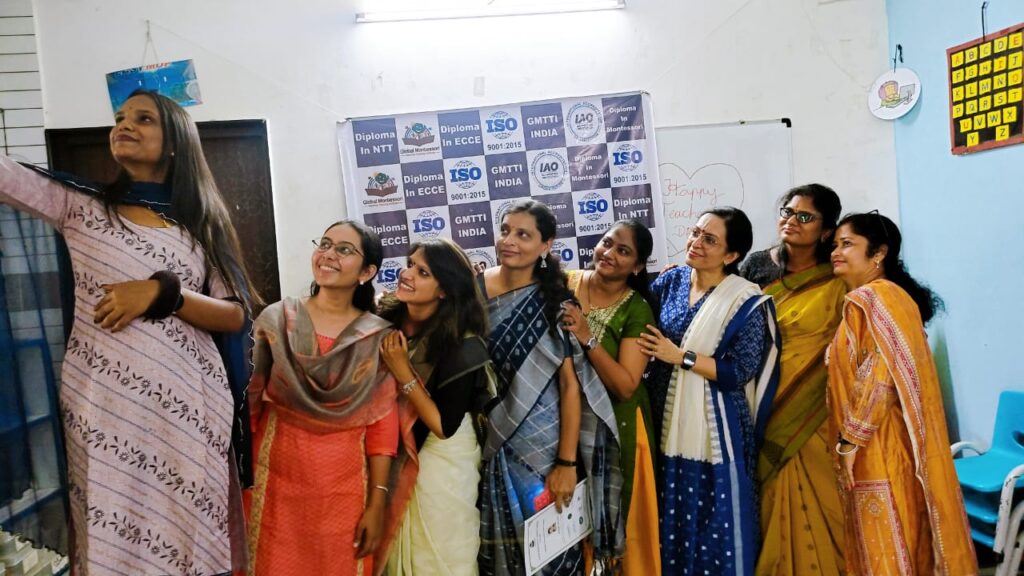
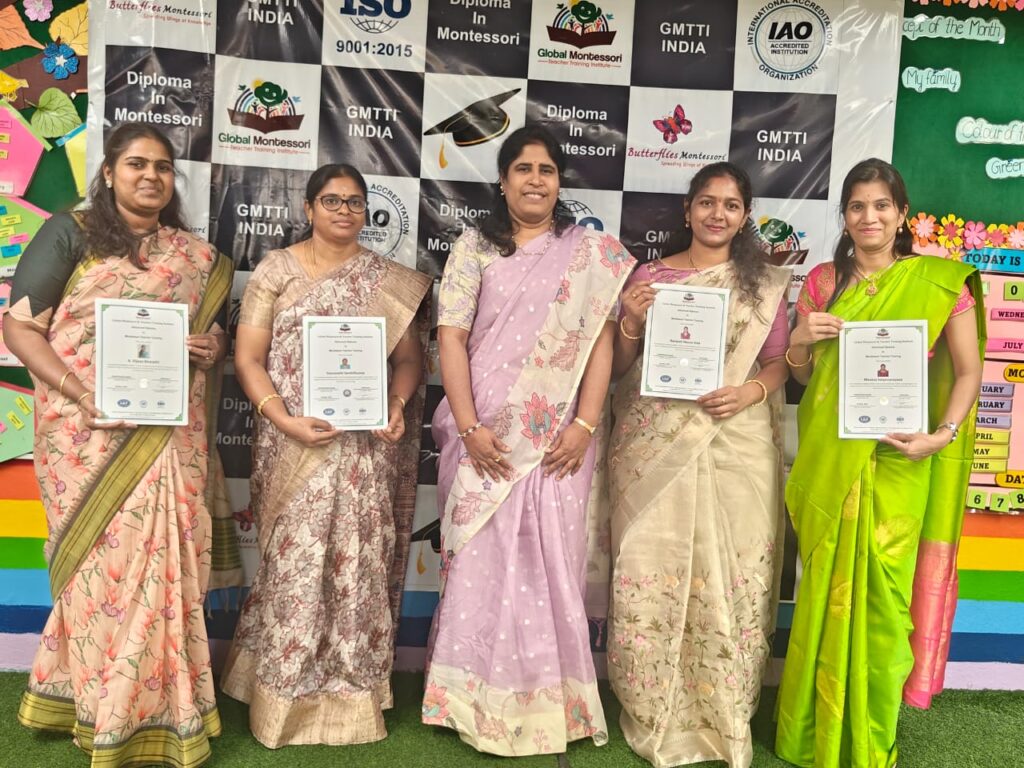
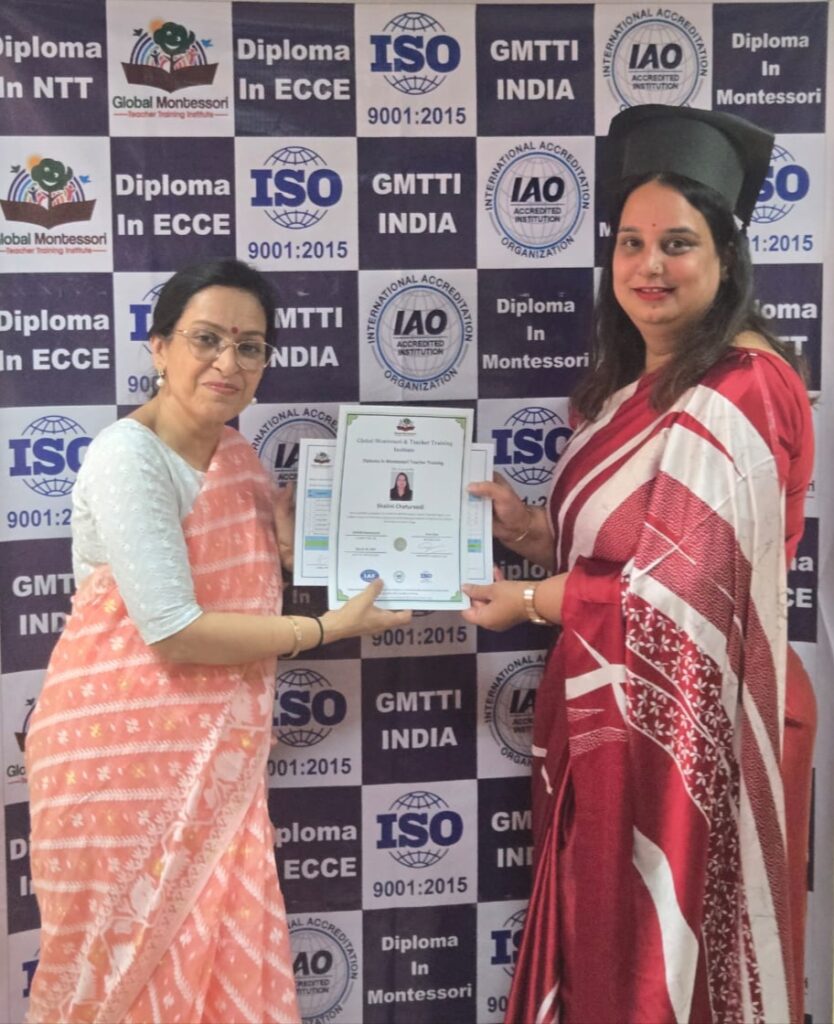
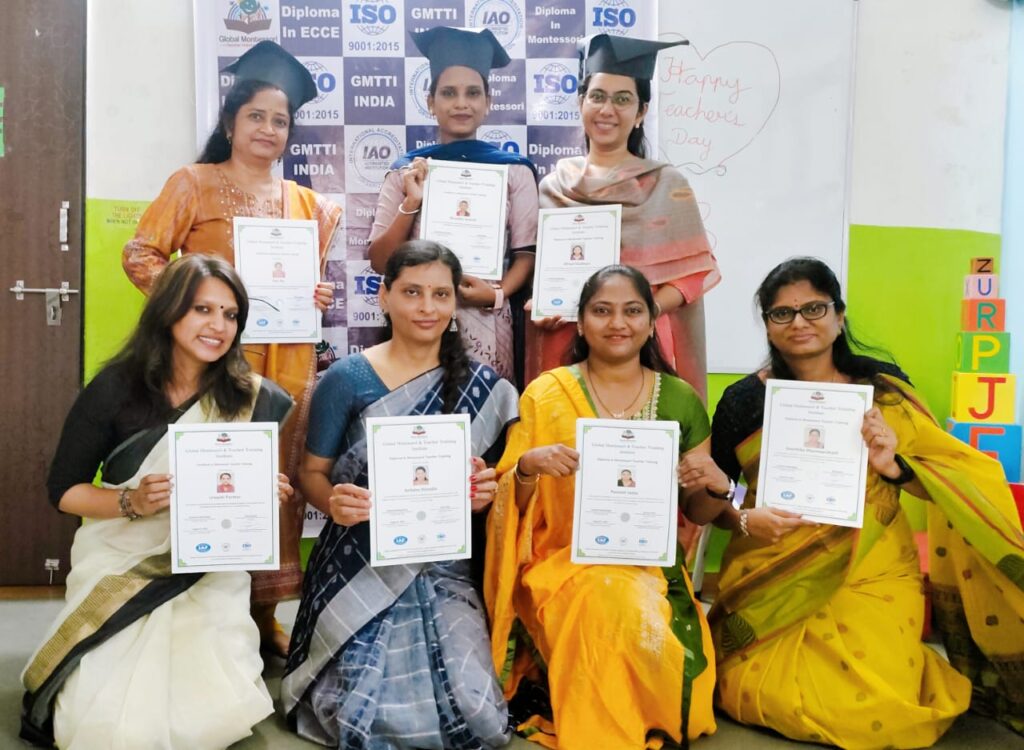
GMTTI, for example, runs its ECCE Diploma through distance and online modes accessible pan-India, which is why it has students enrolled from cities like Delhi, Mumbai, Bangalore, Pune, Hyderabad, Chennai, Kolkata, and Jaipur, alongside its Ahmedabad head office — useful if there’s no dedicated ECCE institute in your own city.
Is the ECCE Course Government Recognized? (Myth vs Fact)
This is the single most confusing question for ECCE aspirants, so let’s be precise.
Myth: “Every ECCE diploma is government-recognized and automatically qualifies you to teach in any government school.”
Fact: Government school teaching positions (especially at primary level) are usually governed by NCTE (National Council for Teacher Education) norms and require specific B.Ed or D.El.Ed qualifications, plus state-level eligibility tests. Most private ECCE diplomas — including short-term and distance programmes — are not NCTE-equivalent teaching degrees. What they do provide is professional training recognised by preschools, daycares, and private schools, which form the overwhelming majority of ECCE hiring in India. Some institutes also align their courses to the NSQF (National Skills Qualification Framework) under Skill India, which is a separate, valid recognition pathway distinct from NCTE.
Internationally, many private institutes — including GMTTI — hold accreditation from bodies like the IAO (USA), which evaluates an institute’s academic management, organisational standards, and institutional performance against global benchmarks. This is a mark of institutional quality assurance, not the same thing as a government teaching licence — and any institute claiming otherwise should be treated with caution.
Bottom line: if your goal is to teach in a preschool, play school, daycare, or start your own centre, a well-accredited private ECCE diploma is exactly what employers look for. If your goal is a government primary school teaching post, you will additionally need NCTE-recognised qualifications like D.El.Ed or B.Ed.
ECCE vs NTT vs Montessori: What’s the Difference?
Aspiring teachers often get stuck comparing these three. Here’s a straightforward comparison:
| Course | Age Group Focus | Core Approach | Best Suited For |
| ECCE | Birth to 6 years | Broad child development, health, and general pedagogy | Those wanting foundational, versatile early-years training |
| NTT | 2 to 5 years | Nursery-classroom specific teaching skills and routines | Those specifically targeting nursery/pre-primary teacher roles |
| Montessori | 2 to 6 (up to 10 in some schools) | A specific pedagogy using structured apparatus and self-directed learning | Those wanting to teach in Montessori-method schools specifically |
Many working teachers eventually complete more than one of these — for instance, an ECCE diploma for the broad foundation, followed by Montessori training if they later join a Montessori-method school.
Career Scope After ECCE: Where Can You Work?
An ECCE qualification opens doors across a genuinely wide range of roles:
- [ ] Preschool or nursery teacher (ages 0–5)
- [ ] Early Years Coordinator
- [ ] Deputy Head of a preschool
- [ ] Nursery school in-charge (day-to-day operations)
- [ ] Early childhood curriculum developer
- [ ] Education consultant
- [ ] Childcare specialist in daycare centres
- [ ] Anganwadi worker or government early-years programme staff
- [ ] Founder of your own preschool or home-based learning centre
A typical career path looks like this: A student completes her ECCE Diploma through distance mode while managing home responsibilities. Within a year, she joins a local playschool as a junior teacher. After two to three years of classroom experience, she is promoted to lead teacher or coordinator. Some go on to open their own small preschool once they’ve built enough confidence and a local reputation — a common and realistic trajectory in this field, not an exception.
This momentum is also being driven by policy: India’s push toward foundational-stage education under NEP 2020, including large-scale recruitment drives for “Balvatika” (pre-primary) classrooms in government schools, is creating fresh demand for trained early-years educators across the country.
ECCE Salary in India: What to Realistically Expect
Salaries vary significantly by city, institution type, and experience. Based on current 2026 industry data across multiple salary sources:
| Experience Level | Approximate Monthly Salary |
| Fresher (0–2 years) | ₹10,000 – ₹18,000 |
| 2–5 years experience | ₹18,000 – ₹30,000 |
| 5+ years / Coordinator role | ₹30,000 – ₹60,000 |
| Senior leadership (Head/Deputy Head, metro city) | ₹60,000 – ₹1,00,000+ |
International or premium preschools in metro cities typically pay at the higher end of these ranges. Government Anganwadi and Balvatika roles have their own fixed pay scales, which vary by state.
Myth vs Fact: Myth — “Preschool teaching doesn’t pay well, so it’s not worth training for.” Fact — Entry-level pay is modest, like most teaching-entry roles, but it grows meaningfully with experience and specialisation. Teachers with recognised training and a coordinator-track career consistently out-earn untrained staff, and many eventually build far higher income through their own preschools.
Future Demand: Why ECCE Careers Are Growing in India
Three forces are pushing demand for trained ECCE professionals higher every year:
- Policy push — NEP 2020’s Foundational Stage framework (ages 3–8) and the National Curriculum Framework built around it have made early-years education a national priority, not an afterthought.
- Market growth — India’s private preschool sector continues to expand rapidly as urban parents invest more in early learning.
- Government recruitment — Large-scale Balvatika and Anganwadi-linked hiring drives are actively looking for trained early-years educators, not just volunteers.
AI’s Role in the Future of Preschool Teaching
AI tools are already helping teachers with lesson planning, worksheet generation, and progress tracking. But early childhood education is built on human warmth — emotional bonding, physical play, patient one-on-one attention — none of which a screen or algorithm can replace for a 3-year-old. If anything, AI is likely to remove administrative burden from ECCE teachers, freeing more time for the hands-on interaction that actually defines good early-years teaching. This is a career path that stays fundamentally human.
Common Mistakes Students Make When Choosing an ECCE Course
- [ ] Choosing the cheapest option without checking accreditation
- [ ] Ignoring the practical/internship component (theory alone won’t prepare you for a real classroom)
- [ ] Not confirming whether the mode (online/distance/regular) actually fits their daily schedule
- [ ] Assuming any general “teacher training” course covers ECCE-specific skills
- [ ] Not asking whether personal tutor or mentor support is included
- [ ] Enrolling without checking career/placement guidance offered after the course
What to Look for in an ECCE Institute
Whichever institute you eventually choose, evaluate it against this checklist:
- [ ] Verifiable accreditation (institutional, and NSQF-aligned if government-linked recognition matters to you)
- [ ] Flexible modes — online, distance, and regular — so the course fits your real life
- [ ] A syllabus with genuine practical/demonstration components, not just theory
- [ ] Personal tutor or mentor support, not just pre-recorded videos
- [ ] Transparent, upfront fee structure
- [ ] A track record — years of operation, number of students trained, number of learning centres
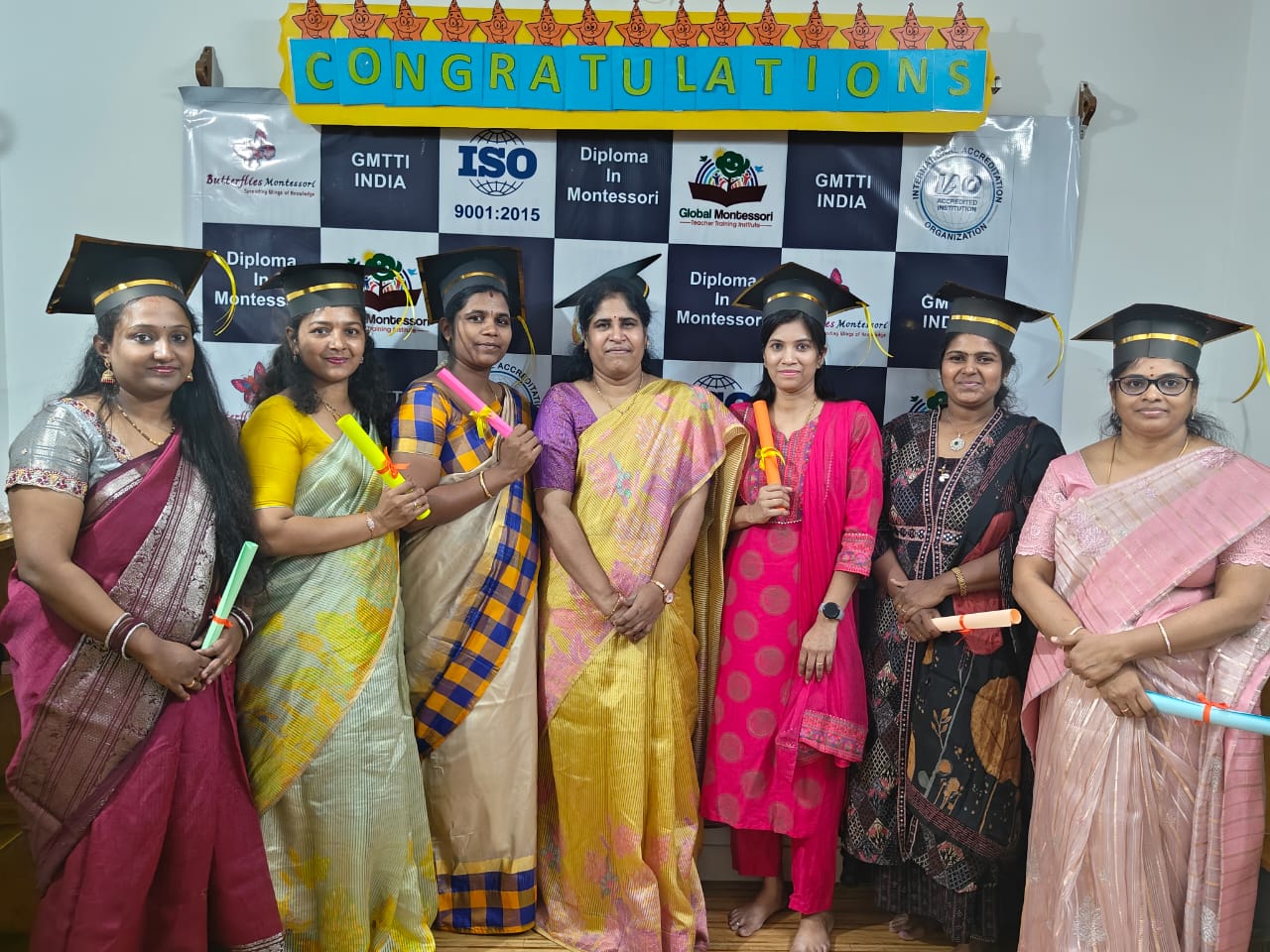
Institutes like GMTTI (Global Montessori & Teacher Training Institute) — with 15+ years in early-years teacher training, 5,000+ students trained, 55+ learning centres, and IAO (USA) Full Accreditation — are built around this exact checklist, offering the ECCE Diploma through online and distance modes with personal tutor support for students across India, not just in Ahmedabad where its head office is based. Whether GMTTI or another accredited institute, the checklist above matters more than the brand name.
Frequently Asked Questions
1. What is the full form of ECCE? ECCE stands for Early Childhood Care and Education, covering the care, development, and teaching of children from birth to around 6 years.
2. Can I do an ECCE course after Class 12? Yes. A 10+2 pass in any stream is the standard eligibility for the ECCE Diploma, which is the most commonly pursued level.
3. Is ECCE the same as NTT? No. ECCE is broader, covering general early-years child development and pedagogy, while NTT focuses specifically on nursery-classroom teaching skills. Many teachers complete both over their careers.
4. Can I do the ECCE course online from a different city? Yes. Several institutes, including GMTTI, offer ECCE training through online and distance modes accessible from anywhere in India, so you don’t need to relocate near a physical centre.
5. Is an ECCE diploma enough to open my own preschool? An ECCE diploma gives you the pedagogical foundation, but opening a preschool also involves business registration, safety compliance, and (depending on your state) specific licensing requirements. Treat the diploma as your teaching foundation, not your entire business plan.
6. Does ECCE training help outside India? Early-years teaching principles are broadly similar worldwide, and internationally accredited diplomas are often recognised by schools abroad, though local visa and licensing rules always apply — check specific country requirements before assuming direct equivalence.
7. How is ECCE different from a B.Ed degree? A B.Ed is a formal, NCTE-recognised degree typically required for government school teaching posts at higher grades. ECCE is a specialised, shorter professional qualification focused specifically on the 0–6 age group, ideal for preschool and daycare roles rather than formal school-system postings.