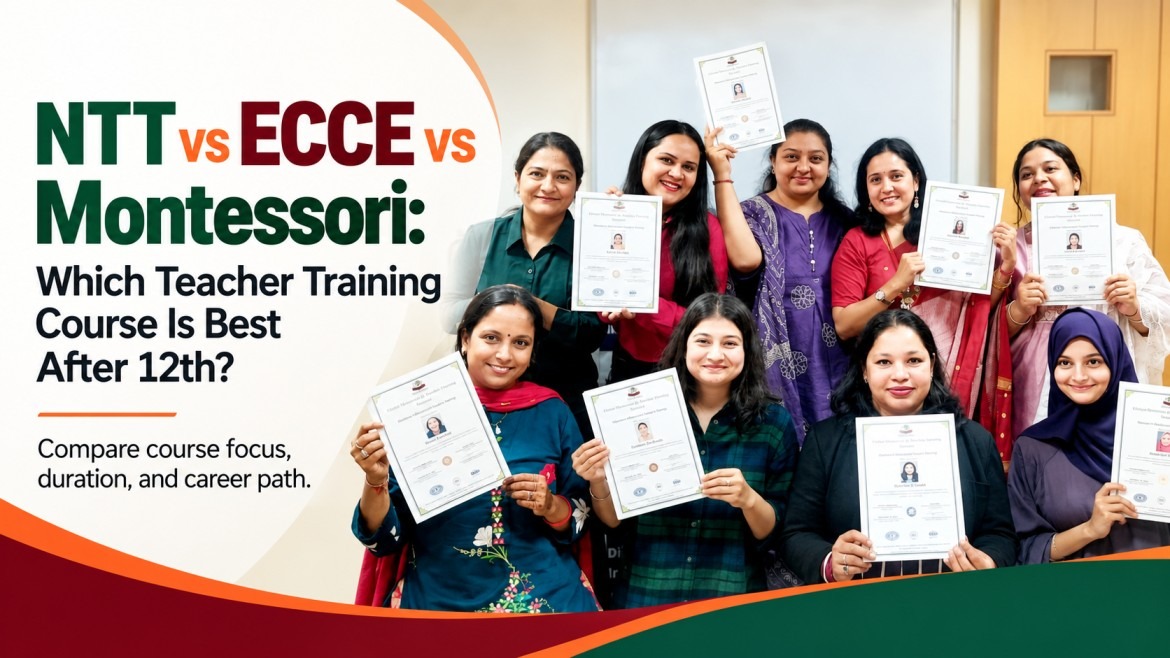

Choosing a teacher training course is a big decision, especially when you are preparing for your first job or thinking of returning to work after a break. You need training that fits your routine and prepares you for a classroom. A certificate matters, but so does the confidence to use what you have learnt.
At Global Montessori & Teacher Training Institute (GMTTI), we focus on preparing aspiring and working educators for the everyday realities of early childhood education. Based in Ahmedabad, Gujarat, with a network of training centres across India, we offer Montessori Teacher Training, Early Childhood Care and Education (ECCE), and Nursery Teacher Training (NTT). Here is what makes our approach worth considering if you are planning a career in preschool education.
We teach you to understand children, not simply deliver lessons
A nursery classroom can be full of surprises. One child wants to repeat the same activity five times, another is finding it difficult to join a group, and a third is curious about everything on the shelf. Knowing the alphabet or a collection of rhymes is not enough to respond thoughtfully to these situations. Teachers need to understand how young children think, communicate, develop independence and learn at different speeds.
Our courses introduce child psychology, developmental stages and child-centred teaching methods. In Montessori training, this includes observing children, preparing an environment they can explore safely and knowing when to guide rather than interrupt. You learn why an activity matters, not just how to conduct it.
brp_mask:0;
brp_del_th:null;
brp_del_sen:null;
delta:null;
module: photo;hw-remosaic: false;touch: (-1.0, -1.0);sceneMode: 2;cct_value: 0;AI_Scene: (-1, -1);aec_lux: 0.0;aec_lux_index: 0;albedo: ;confidence: ;motionLevel: -1;weatherinfo: null;temperature: 34;
Practical classroom skills are part of the learning
It is one thing to read about activity-based learning and quite another to plan an activity for a lively preschool class. That is why our course content connects educational concepts with tasks teachers actually perform. Depending on the programme, learners study lesson planning, classroom organisation, assessment, storytelling, early language development and age-appropriate activities.
Montessori modules introduce materials and methods such as sandpaper letters, number rods, sensorial exercises and practical life activities. ECCE and NTT cover areas including play-based teaching, health and hygiene, art and craft, and communication with parents. Our published course outlines also include practical assignments and assessments, with lesson-plan projects in diploma programmes. These exercises give you opportunities to think through how a lesson would work, what materials it needs and how you would respond when children need different levels of support.
You can choose between Montessori, ECCE and NTT
Not everyone who wants to become a teacher has the same career goal. Some are drawn specifically to the Montessori method; others want a broader understanding of early childhood development or wish to teach in nursery and kindergarten classrooms. We offer different training paths so you can select a course that matches your interests.
Our Montessori Teacher Training course focuses on Montessori philosophy, learning materials, observation, child development and classroom preparation. The ECCE course takes a wider look at care and education in the early years, including play, language, numeracy, wellbeing and developmental needs. Our Nursery Teacher Training course focuses on the teaching methods and daily routines used with younger children in nursery and preschool settings.
Certificate, diploma and advanced diploma options are described on our course pages. Eligibility depends on the programme level, so our admissions team can help you compare the options rather than choosing a course based on its name alone.
Learning options that fit different routines
Many people interested in teacher training are already managing work, home or family commitments. Travelling to a centre every day may not be practical, particularly for a parent with young children or someone living outside a major city. A useful course should make learning possible without ignoring these realities.
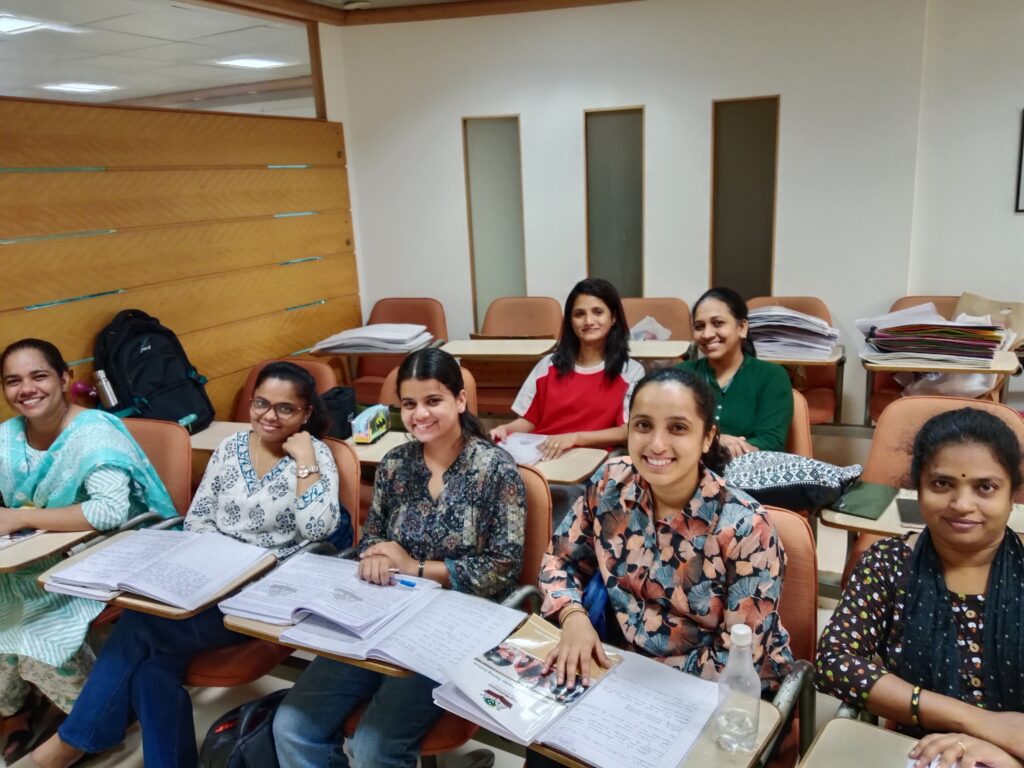
GMTTI offers regular classroom learning as well as online, distance and hybrid options, depending on the programme. Classroom sessions may suit students who value face-to-face interaction and scheduled practice. Online or distance learning can be a better fit for those who need flexibility around their existing commitments. Before enrolling, ask about the timetable, study materials, practical requirements and assessment format for your chosen mode. The right option is one you can follow consistently, not simply the one that sounds most convenient.
Academic guidance when you need it
Starting a new course can feel overwhelming, particularly if you have not studied for several years. You may understand a topic during a lesson but still need help preparing an assignment or deciding how to apply the method in a classroom. Being able to ask questions makes a real difference to the learning experience.
Our course pages describe personal tutor support through phone, chat and email, alongside guidance from experienced trainers. This support is intended to help students work through course concepts, assignments and practical teaching questions. Our institute also offers workshops and professional development activities. The goal is to give learners a place to turn when they need clarification instead of expecting them to manage every difficulty on their own.
An Ahmedabad base with centres across India
Your location should not automatically decide whether teacher training is accessible. GMTTI is headquartered in Ahmedabad and has developed an affiliated training network across India. Our network includes 55+ affiliated training centres, and our centre directory lists locations in Gujarat, Karnataka, Maharashtra, Tamil Nadu, Kerala, West Bengal and several other states.
For students, a wider network means more ways to enquire about nearby learning options and access admissions guidance. Availability, course formats and batch schedules can differ from one centre to another, so we recommend checking the details of your nearest centre before applying. If there is no suitable classroom option nearby, ask about online or distance study.
We want you to feel prepared for the next step
Most students enrol because they hope to use their training, whether in a preschool, Montessori school, daycare centre or another early learning setting. Professional preparation therefore needs to consider more than examinations. It should help a learner think about planning a school day, supporting children with different needs, speaking with parents and working alongside other teachers.
GMTTI includes classroom management, lesson planning and communication in its programmes, and our website describes career guidance and placement assistance. We can help students explore possible directions, such as nursery teaching, Montessori teaching or further development in early years education. However, completing a course is not a guarantee of employment. Hiring decisions and qualification requirements vary by school, role and location, and candidates should check the requirements of the positions they intend to apply for.
A place for freshers, working teachers and people returning to work
A teaching career does not always begin immediately after college. Some people discover an interest in education after raising their own children. Others are working in a preschool and want to improve their lesson planning or better understand child development. There are also students who have completed Class 10 or Class 12 and want to explore a professional training option.
Our programmes are designed for people at different stages. The published eligibility information covers certificate, diploma and advanced diploma pathways, with different minimum educational qualifications. GMTTI also states that there is no upper age limit for its Montessori and ECCE programmes. What matters is selecting a course for which you meet the entry requirements and having a genuine interest in working with young learners.
Training that responds to how India views the early years
Early childhood education has an important place in India’s National Education Policy 2020. The National Curriculum Framework for the Foundational Stage covers ages three to eight and places emphasis on play, activity-based experiences, language, numeracy and children’s overall development. A teacher uses these approaches when planning a story session, organising a counting game or creating a welcoming classroom environment.
Our Montessori, ECCE and NTT syllabuses address many of these practical themes, including child development, play-based learning and age-appropriate teaching. Learning the reasoning behind these methods can help you make better choices in a classroom instead of relying only on worksheets or fixed routines.
Clear information about certificates and accreditation
Before enrolling in any teacher training programme, it is sensible to understand exactly what qualification you will receive. GMTTI’s accreditation page lists accreditation by the International Accreditation Organization (IAO), ISO 9001:2015 certification and memberships in early childhood and Montessori-related organisations. We encourage prospective students to review the relevant details with our admissions team.
It is equally important to understand that a training certificate does not automatically meet every school’s recruitment rules or the requirements for every government teaching post. If you have a particular employer, country or role in mind, check its eligibility conditions before choosing your course. Making that enquiry early can help you select a programme that is suitable for your plans.
Learning alongside a wider community of aspiring educators
GMTTI has trained 5,000+ students through its programmes. Beyond the numbers, we value the fact that learners come to teacher training with different experiences, questions and ambitions. Sharing ideas, discussing classroom situations and seeing how others approach an activity can help make learning more meaningful.
You can also explore the student testimonial videos on our website to hear directly from learners about their experiences. Their perspectives can help you decide which questions to ask and what kind of learning environment you are looking for.
What should you check before enrolling?
A good admissions conversation should give you clear answers, not pressure you to decide immediately. Ask which course suits your education and career goals, what its current duration and total fee are, whether your preferred centre offers the required learning mode, and how assignments and practical work are assessed. You should also confirm what certificate is awarded and whether it meets the requirements of any school or employer you have in mind.
Our team can guide you through the available Montessori, ECCE and NTT options and explain the next steps. Taking the time to understand these details helps you begin your training with realistic expectations and a plan you can follow.
Begin your teacher training journey with GMTTI
A good early childhood teacher is patient, observant and willing to keep learning. Professional training can help turn that interest into practical knowledge and greater classroom confidence. We can help you explore a suitable training path.
Contact Global Montessori & Teacher Training Institute to discuss course eligibility, fees, batch schedules and learning options. Call +91 8160359574, email info@globalmontessori.co.in, or visit www.globalmontessori.co.in to send an enquiry. Your next step can begin with a simple conversation about where you want your teaching career to go.